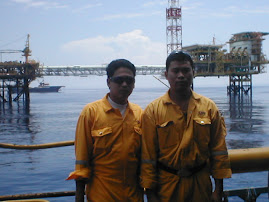
Sudah lama kumengenalinya .Dan aku menganggap dialah saudara kerja.
Walaupun apa saja yang aku mampu .Aku membantunya apa yang perlu .Sehingga aku tersisih. Berbalah dengan boss. Kau kata teman sejati.
Lebih sukar dicari. Memang benar orng berkata, Harus awas dan waspada. Pada yang manis dibibir .Aku tersingkir.
Kawan yang ku benar harap-harapkan. Bukan jujur seperti yang kusangkakan. Kawan kini makan kawan .Ku dalam keadaan teraniaya. Kawan makan kawan.
Kini hilang segala yang ku ada. Ku hilang kerja, maruah dan muka.Kau racunkan fikiranku dan nya. Kau ambil kesempatan merapatinya boss.
Aku dah terkena dengan hasutannya. Dan rupa-rupanya ada agendanya. Kerja ku pergi kerna batu api, Kawan ku sendiri membakar ku ini.Setelah ku berikan kepercayaan .Tak terlintas di fikiran kau buat bukan-bukan. Semua tipu helah tak akan terjadi lagi .Tanyalah diri apa yang sudah jadi. Kini kau tahu bagaimana kurasa ,Menahan peritnya bisa.
Semua ini tidak kuduga. Kawan makan kawan.
Thursday, July 30, 2009


"Kawan"! - Sebuah Puisi... " - Oleh burung ciok umoh!
Untuk apa ertinya berkawan... kalau kawan tak boleh nak tolong kawan! Kita kawan-kawan tak mau lawan! Terus kerja sampai ajal!
Kalau ada kawan yg suka makan kawan... Tak perlulah adanya kawan! Kawan-kawan bukan haiwan! So jangan ikut perasaan ok!
Ada kawan suka melihat kegembiraan kawan yg lain... Ada kawan yg suka melihat tangisan kawan yg lain! Kalau begitu maknanya kawan... Memang sukar menilai ertinya kawan!
Ada kawan hanya bersama ketika senang... Ada kawan hanya melihat saja kawan yg sedang kesusahan! Ada pula kawan ygsuka melihat kejatuhan kawan-kawan! Malah ada juga kawan yg sentiasa berusaha menikam kawan dari belakang!
Untuk apa ertinya berkawan kalau bukan sebagai kawan! Untuk apa ertinya berkawan kalau tak mampu menjadi kawan! Untuk apa ertinya berkawan kalau masing-masing suka berlawan! Untuk apa ertinya berkawan kalau kawan suka makan kawan!
Kawan yg baik adalah kawan yg mahu berada bersama kawan ketika susah dan senang! Kawan yg baik adalah kawan yg sentiasa sporting! "
Berkawan dengan prinsip hasad dengki lama-kelamaan membawa mati!
Kawan tanpa kawalan memang menyeronokan! Namun awas akan kebatilan seorang kawan yg mungkin akan membahayakan!
Apa gunanya erti berkawan kalau kawan tak mahu memahami hati seorang kawan! Apa gunanya erti berkawan kalau kawan hanya mementingkan diri sendiri sehingga melupakan kawan!
Apa gunanya erti berkawan kalau ada kawan yg tak sanggup menangis kerana kawan! Kawan adalah kawan!
Tanpa kawan akan kosonglah ertinya berkawan!
Untuk berkawan memanglah mudah! Namun utk menjaga hubungan antara kawan adaah sesuatu yg maha sukar! Berkawan memerlukan pengorbanan! Berkawan memerlukan kesefahaman! Berkawan memerlukan kesesuaian!
Tanpa kawan dalam kehidupan... akan suramlah perjalanan! Untuk apa ertinya berkawan kalau bukan sebagai sebuah sandaran!
Untuk apa ertinya berkawan kalau bukan sebagai sebuah platform utk meluahkan perasaan! Untuk itu...
sama-samalah menjaga kawan! Jangan sampai kawan makan hati kerana bengang dengan sikap kawan! Jangan sampai kawan jadi serba-salah apabila terpaksa berhadapan dengan karenah seorang kawan!
Hormati kawan umpama menghormati diri sendiri! Nescaya akan terbitlah makna sebenar "Untuk Apa Ertinya Berkawan"
KIta kawan-kawan tak mahu lawan! aku caya sama lu! nie puisi khas untuk kau... bernama kawan!!
Mangsa tikam belakang dan kaki ampu..... burung ciok umoh
Wednesday, July 29, 2009
SARAWAK SHELL BINTULU PLANT (SSBP)
 Bintulu Crude Oil Terminal
Sarawak Shell Bintulu Plant (SSBP) formerly known as Bintulu Crude Oil Terminal (BCOT) was the first major industrial project to go off the ground Tg. Kidurong in 1979.
The Project comprises three crude oil storage tanks, each with a capacity of 410,000 barrels. Located on the western boundary of the MLNG site, the plant coprises 3 areas of operations namely:
1.Crude Oil Operations (BCOT)
2.Condensate Stabilisation (BSTAB)
3.Gas Sales Facilities (BAGSF)
Daily Crude Production nett is 60,000 barrels per day. Daily Condemate Production is about 80,000 barrerls per day. Daily Gas Sales to downstream customers such as SMDS, ABF, SESCO and Petronas Gas Berhad is about 190 MMSCF per day. The Crude Oil and Condenate from the plant is either exported locally or to outside customers.
SHELL MIDDLE DISTILLATE SYNTHESIS (SMDS) PLANT
 SMDS Plant
 Shell MDS (Malaysia) Sdn. Bhd. a joint-venture company between Shell Gas, Petronas, Mitsubishi Corporation and the Sarawak State Government was formed in 1986. The company owns and operates the Shell Middle Distillate Synthesis (SMDS) plant, the world's first commercial gas to liquid plant, in Bintulu Sarawak.
The plant converts natural gas into high quality synthetic oil products and specialty chemicals which are paraffnic and colourless. Some 100 million standard cubic feet per day of natural gas are converted into 470,000 tonnes per annum of middle distillates (gasoil, kerosene, naphtha) and specialty products (detergent feedstocks, solvent feedstocks, various grades of waxes). The plant started operations in May 1993 and its products are sold globally. For more information, please contact 086-252211 / 292405. Email: shellmds@tm.net.my
Monday, July 27, 2009
SapuraCrest awarded RM3B Shell Gumusut-Kakap Offshore Field Contract
Kuala Lumpur, March 17, 2009 - Charting another milestone in its involvement in deepwater technology, leading regional oil and gas services provider SapuraCrest Petroleum Berhad will be undertaking a contract worth RM3 billion for offshore installation works at the Gumusut-Kakap Field, operated by Sabah Shell Petroleum Company Limited (Shell). This follows the recent award of a lump sum contract to SapuraCrest’s wholly owned subsidiary, TL Offshore Sdn Bhd. The contract is expected to be executed over a three year period beginning this year.
"This contract award is a tribute to the extensive experience and expertise of our engineers as it involves advanced and complex engineering design in the execution of deepwater works and highlights the capabilities of our latest advanced vessel, the Sapura 3000. The project will give us the opportunity to develop Malaysian engineers and managers in this new frontier and will allow Malaysians to undertake future deepwater engineering, construction and installation in Malaysia and across the region. This will move Malaysia higher up in the value chain in the ability to execute jobs with increasing complexities," Datuk Shahril added.
leading regional oil and gas services provider SapuraCrest Petroleum Berhad will be undertaking a contract worth RM3 billion for offshore installation works at the Gumusut-Kakap Field, operated by Sabah Shell Petroleum Company Limited (Shell). This follows the recent award of a lump sum contract to SapuraCrest’s wholly owned subsidiary, TL Offshore Sdn Bhd. The contract is expected to be executed over a three year period beginning this year. SapuraCrest will deliver the contract through its joint venture company Sapura Acergy Sdn Bhd (SASB) where a major part of the work will be executed using the Sapura 3000, its state-of-the-art dynamically positioned heavy lift and deepwater pipelay vessel. Engineering and procurement work will commence with immediate effect and offshore installation will begin in 2010. The Gumusut-Kakap field is located about 200 km offshore Sabah with a water depth of 1,200 meters.
The field is the first deepwater development for Shell in Malaysia. However, it presents SapuraCrest its second and most advanced deepwater construction work to date, having earlier completed the Kikeh gas pipeline in Sarawak at a water depth of 1,400 meters. This project will involve more Malaysian engineers and managers, giving them opportunities to further develop in this highly-specialised field.
"The award reflects Shell’s and Petronas’ confidence in our capability and reaffirms the position of SapuraCrest as a leading provider of technologically superior and high quality services in the region. We have invested heavily in strategic assets and resources to the tune of RM1 billion over the last 5 years, and this has helped us position SapuraCrest to undertake projects of this magnitude and complexity. It is an honour to be selected by Shell, one of the biggest players in the global oil and gas industry today," said Datuk Shahril Shamsuddin, Executive Vice-Chairman of SapuraCrest Petroleum.
"This contract award is a tribute to the extensive experience and expertise of our engineers as it involves advanced and complex engineering design in the execution of deepwater works and highlights the capabilities of our latest advanced vessel, the Sapura 3000. The project will give us the opportunity to develop Malaysian engineers and managers in this new frontier and will allow Malaysians to undertake future deepwater engineering, construction and installation in Malaysia and across the region. This will move Malaysia higher up in the value chain in the ability to execute jobs with increasing complexities," Datuk Shahril added.
The contract entails project management, procurement, engineering, transportation and installation services, and works for an oil export pipeline and catenary riser, including the shore approach. It will also involve the installation of flowlines, jumpers, Steel Catenary Risers (SCRs), Pipeline End Terminations (PLET) and flowline inline structures. SASB will also be required to supply and install mooring wires, chains and piles for a semi-submersible Floating Production System (FPS) including towing and installation of the FPS at offshore location. More than 50 percent of the project will be carried out by local manpower and resources.
“We are delighted to be part of Malaysia’s long term growth plans and are pleased to be building solid relationships, creating additional localised support for all our clients in the region. This project will also help promote growth in the oil and gas industry by fostering technology transfer and local talent development, creating new employment opportunities and maximizing local procurement in Malaysia. We also hope that this project will in some small way assist local industries during these trying economic times," said Datuk Shahril.
The Gumusut-Kakap contract will propel SapuraCrest to the next stage of its expansion plans into higher technology services for the oil and gas industry. The contract is also expected to significantly boost current and future revenues.
The Gumusut-Kakap contract will propel SapuraCrest to the next stage of its expansion plans into higher technology services for the oil and gas industry. The contract is also expected to significantly boost current and future revenues.
* Exchange rate of USD1 = RM3.6 used
About SapuraCrest Petroleum Berhad
SapuraCrest Petroleum Berhad, a public-listed subsidiary of the Sapura Group of Companies, is one of the largest local oil and gas integrated service providers in Malaysia.
Through its subsidiaries, SapuraCrest Petroleum is involved in marine installation and construction, offshore drilling and marine services in Malaysia, Asia Pacific and South Asian regions. In particular, SapuraCrest Petroleum services cover the provision of accommodation and support vessels and tender assisted drilling rigs, installation of offshore pipelines and structures, provision of offshore hook-up, commissioning and topside maintenance services, provision of underwater services and provision of offshore geotechnical and geophysical services.
For more information, please visit http://www.sapuracrest.com.my/
For Media Enquiries, please contact:
Norliza Kamaruddin, Sapura Group Corporate Communications
Tel: +603 8949 7727
Email: norliza.k@sapura.com.my
FPSO Kikeh


Malaysia has completed the FPSO Kikeh, its first deepwater floating production storage and offloading (FPSO) facility, a significant event in the nation's endeavour to develop world class deepwater engineering and construction capability.
FPSO Kikeh, completed in 26 months, is also notable in that it is the largest such facility to be constructed in Malaysia. Built by Malaysia Marine & Heavy Engineering (MMHE), a subsidiary of MISC, at its yard in Pasir Gudang, Johor, peninsular Malaysia, the floating production unit was converted from the 337m long 279,000dwt VLCC SS Atlas. FPSO Kikeh, owned and operated by Malaysia Deepwater Terminal, a joint venture between MISC and SBM Offshore, is now on location in block K offshore Sabah, East Malaysia. Leased to Murphy Sabah Oil, the production sharing partner of Petronas Carigali, the FPSO is contracted for an initial period of eight years with options for five three-year follow-on extensions.
Moored in a water depth of 1320m about 120km northwest of Labuan Island, the FPSO will unload its cargo of oil to shuttle tankers every ten days, produced from Malaysia's first deepwater discovery using subsea wells connected to the FPSO by pipelines on the seabed and flexible risers.
Murphy Oil estimates the Kikeh field had proved reserves of 47.5mmbo and 74.6bcf of gas as at year-end 2006. Initial oil production, scheduled for startup in the second half of this year, is expected to be 40,000b/d of oil with a one-year ramp up to a plateau of 120,000b/d.
The turret
FPSO Kikeh's external turret, at around 2300t, is the heaviest ever designed by SBM. It affords permanent mooring, achieved with 10 anchor legs in a 4-3-3 configuration consisting of 127mm studless chain and 98mm wire rope, and acts as a support for the production, injection and utilities lines.
Product, water, power and communication data will be transferred between FPSO Kikeh and the anchored Kikeh DTU (dry tree unit) truss spar by way of fluid transfer lines (FTL) that utilise SBM's Gravity Actuated Pipe (GAP) system.
The turret provides fluid transfer and control functions to and from the vessel to the seabed and the DTU. Flexible subsea risers suspended from the turret feed commingled production fluids from the wells into the turret manifold. Jumpers connected to the GAP take care of fluid transfer to and from the DTU.
Produced fluids, a mixture of oil, gas, water and solid particles, flow to the topsides process modules via the turret swivels.
Treated water will pass through the turret into injection wells and produced gas not used for power generation on board will be initially injected, then exported by pipeline to Labuan Island, about a year after field production starts up.
Wellheads and DTU are controlled from the FPSO through the turret swivels and umbilicals to the seabed and DTU.
Malaysia rising
Through the transfer of technology resulting from the joint effort between MISC and SBM, the FPSO Kikeh project team from MISC and MMHE were able to develop expertise in deepwater construction. This collaboration also supported the growth and development of local vendors by providing business opportunities to more than 80 Malaysian subcontractors and service suppliers.
Marking this achievement the FPSO Kikeh naming ceremony was held at the MMHE yard on 29 March in the presence of Mohd Hassan Marican, MISC chairman and Petronas president and CEO, Claiborne Deming, Murphy Oil president and CEO, Didier Keller, SBM president, and Shamsul Azhar Abbas, MISC president and CEO.
Saturday, July 25, 2009
Basic Principles of Ultrasonic Testing
Basic Principles of Ultrasonic Testing
Ultrasonic Testing (UT) uses high frequency sound energy to conduct examinations and make measurements. Ultrasonic inspection can be used for flaw detection/evaluation, dimensional measurements, material characterization, and more. To illustrate the general inspection principle, a typical pulse/echo inspection configuration as illustrated below will be used.
A typical UT inspection system consists of several functional units, such as the pulser/receiver, transducer, and display devices. A pulser/receiver is an electronic device that can produce high voltage electrical pulses. Driven by the pulser, the transducer generates high frequency ultrasonic energy. The sound energy is introduced and propagates through the materials in the form of waves. When there is a discontinuity (such as a crack) in the wave path, part of the energy will be reflected back from the flaw surface. The reflected wave signal is transformed into an electrical signal by the transducer and is displayed on a screen. In the applet below, the reflected signal strength is displayed versus the time from signal generation to when a echo was received. Signal travel time can be directly related to the distance that the signal traveled. From the signal, information about the reflector location, size, orientation and other features can sometimes be gained.
Ultrasonic Inspection is a very useful and versatile NDT method. Some of the advantages of ultrasonic inspection that are often cited include:
* It is sensitive to both surface and subsurface discontinuities.
* The depth of penetration for flaw detection or measurement is superior to other NDT methods.
* Only single-sided access is needed when the pulse-echo technique is used.
* It is highly accurate in determining reflector position and estimating size and shape.
* Minimal part preparation is required.
* Electronic equipment provides instantaneous results.
* Detailed images can be produced with automated systems.
* It has other uses, such as thickness measurement, in addition to flaw detection.
As with all NDT methods, ultrasonic inspection also has its limitations, which include:
* Surface must be accessible to transmit ultrasound.
* Skill and training is more extensive than with some other methods.
* It normally requires a coupling medium to promote the transfer of sound energy into the test specimen.
* Materials that are rough, irregular in shape, very small, exceptionally thin or not homogeneous are difficult to inspect.
* Cast iron and other coarse grained materials are difficult to inspect due to low sound transmission and high signal noise.
* Linear defects oriented parallel to the sound beam may go undetected.
* Reference standards are required for both equipment calibration and the characterization of flaws.
The above introduction provides a simplified introduction to the NDT method of ultrasonic testing. However, to effectively perform an inspection using ultrasonics, much more about the method needs to be known. The following pages present information on the science involved in ultrasonic inspection, the equipment that is commonly used, some of the measurement techniques used, as well as other information.
Ultrasonic Testing (UT) uses high frequency sound energy to conduct examinations and make measurements. Ultrasonic inspection can be used for flaw detection/evaluation, dimensional measurements, material characterization, and more. To illustrate the general inspection principle, a typical pulse/echo inspection configuration as illustrated below will be used.
A typical UT inspection system consists of several functional units, such as the pulser/receiver, transducer, and display devices. A pulser/receiver is an electronic device that can produce high voltage electrical pulses. Driven by the pulser, the transducer generates high frequency ultrasonic energy. The sound energy is introduced and propagates through the materials in the form of waves. When there is a discontinuity (such as a crack) in the wave path, part of the energy will be reflected back from the flaw surface. The reflected wave signal is transformed into an electrical signal by the transducer and is displayed on a screen. In the applet below, the reflected signal strength is displayed versus the time from signal generation to when a echo was received. Signal travel time can be directly related to the distance that the signal traveled. From the signal, information about the reflector location, size, orientation and other features can sometimes be gained.
Ultrasonic Inspection is a very useful and versatile NDT method. Some of the advantages of ultrasonic inspection that are often cited include:
* It is sensitive to both surface and subsurface discontinuities.
* The depth of penetration for flaw detection or measurement is superior to other NDT methods.
* Only single-sided access is needed when the pulse-echo technique is used.
* It is highly accurate in determining reflector position and estimating size and shape.
* Minimal part preparation is required.
* Electronic equipment provides instantaneous results.
* Detailed images can be produced with automated systems.
* It has other uses, such as thickness measurement, in addition to flaw detection.
As with all NDT methods, ultrasonic inspection also has its limitations, which include:
* Surface must be accessible to transmit ultrasound.
* Skill and training is more extensive than with some other methods.
* It normally requires a coupling medium to promote the transfer of sound energy into the test specimen.
* Materials that are rough, irregular in shape, very small, exceptionally thin or not homogeneous are difficult to inspect.
* Cast iron and other coarse grained materials are difficult to inspect due to low sound transmission and high signal noise.
* Linear defects oriented parallel to the sound beam may go undetected.
* Reference standards are required for both equipment calibration and the characterization of flaws.
The above introduction provides a simplified introduction to the NDT method of ultrasonic testing. However, to effectively perform an inspection using ultrasonics, much more about the method needs to be known. The following pages present information on the science involved in ultrasonic inspection, the equipment that is commonly used, some of the measurement techniques used, as well as other information.
Subscribe to:
Posts (Atom)